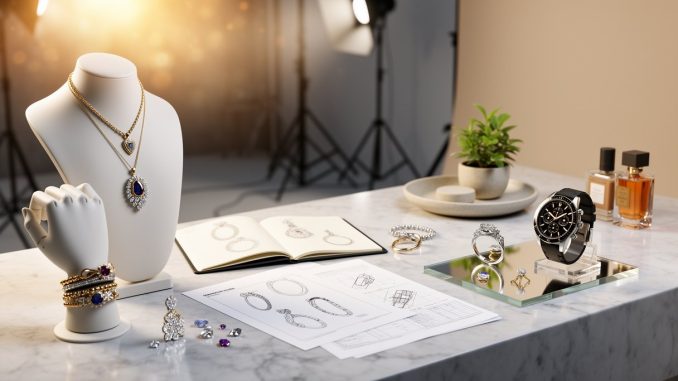
In a market where a single image can decide a sale, jewellery brands need visuals that reveal every facet, fire, and finish. A modern Jewellery content creation tool transforms raw ideas—sketches, CAD models, or simple product photos—into high-impact imagery that sells. Instead of waiting weeks for a studio booking, shipping inventory, and retouch revisions, teams can now produce consistent, shoppable assets in hours. The result is faster launches, richer storytelling, and a more resilient content pipeline that scales with your brand’s growth.
From artisan makers to luxury houses, the pressure is the same: produce more assets for more channels without compromising quality. A new generation of AI-powered visual production brings precision lighting, realistic materials, and on-brand styling into a single workflow. Expect true-to-life metals, gemstone sparkle, clean packshots, aspirational lifestyle scenes, and even on-model compositions—delivered in web-ready or print-ready resolutions up to 2K and 4K. This isn’t a shortcut; it’s a professional-grade studio made accessible, accelerating time-to-market while preserving craftsmanship online.
Why Jewellery Brands Need an AI-Powered Content Creation Tool Today
E-commerce and social media have transformed how jewellery is discovered. Customers compare finishes, carat weights, and settings from a phone screen, expecting crisp details and immediate context. Traditional photoshoots still have a place, but they’re slow, costly, and hard to repeat at scale. An AI-driven visual production workflow bridges the gap by generating consistent images from digital inputs—such as sketches, CAD files, or existing product shots—while maintaining stylistic control and brand consistency. For collections with multiple metals or gemstones, a single master setup can output dozens of variants at once, ensuring SKU coverage without exhausting your budget.
Quality is the deciding factor. Jewellery lives and dies by its micro-detail: prong finesse, pavé uniformity, surface polish, and stone brilliance. Advanced tools simulate material physics—think specular highlights on platinum, dispersion in diamonds, or the subtle fluorescence of certain gems—so surfaces read as authentically as they would under a jeweller’s loupe. This level of fidelity boosts conversion, reduces returns, and conveys trust. It also gives designers confidence to preview and iterate concepts before committing to full production.
Speed matters equally. Seasonal drops, influencer tie-ins, and market events demand rapid content turnarounds. Instead of coordinating multiple teams across photography, retouching, and design, a single platform centralizes the process: light, render, refine, and export. Batch workflows automate repetitive tasks, so you can generate complete image sets—hero shots, white-background packshots, and editorial scenes—on the same timeline. With 2K and 4K outputs, assets are ready for marketplaces, brand sites, social ads, print collateral, and in-store displays.
Finally, consistency is invaluable across omnichannel touchpoints. Templates, saved lighting rigs, and controlled color profiles ensure your yellow gold looks the same on an Instagram Reel, in a printed lookbook, or on a PDP. A uniform visual language not only strengthens brand recognition; it also streamlines handoffs for distributed teams in London, New York, Dubai, or Hong Kong. When your studio lives in software, global teams can collaborate, approve, and publish with fewer revisions and clearer outcomes.
Essential Features to Look For in a Jewellery Content Creation Platform
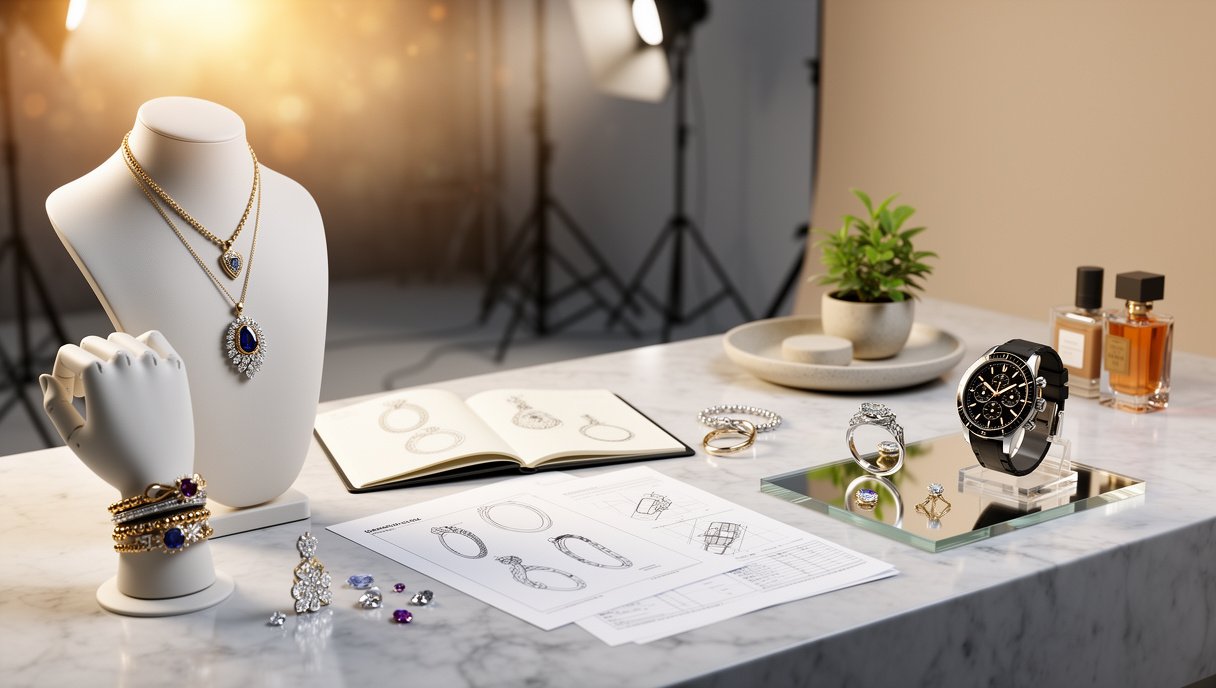
A powerful jewellery-focused platform should map precisely to the realities of product design and merchandising. Start with inputs: the ability to ingest sketches, CAD files (to maintain design intent and dimensions), and existing product photos. From there, look for physically accurate material handling—true metallic reflections for gold, silver, and platinum; realistic diffusion and sheen for enamel; faithful gem behavior, including scintillation and fire. These capabilities separate general 3D tools from a dedicated Jewellery content creation tool built for fine detail.
Lighting control is essential. A drag-and-drop studio with HDRI options, softboxes, reflectors, and macro-friendly setups gives you the finesse to highlight micro-pavé or milgrain edges without harsh artifacts. Presets help non-specialists move fast, while granular controls let seasoned art directors dial in highlights and shadow roll-off precisely. For brand consistency, the ability to save and reuse lighting templates across collections is critical—every hoop, stud, and tennis bracelet should feel like it belongs to the same visual family.
On the composition side, versatility is key. You’ll want clean packshots on pure white or transparent backgrounds, lifestyle scenes that place pieces in real settings, and on-model imagery that respects skin tone, scale, and proportions. Advanced silhouette and masking tools ensure delicate chains don’t vanish and prongs remain crisp against complex backgrounds. Look for smart editing features that handle dust removal, micro-scratch softening, and gemstone cleanliness—common retouching needs for jewellery that otherwise demand specialist attention.
Workflow and output matter just as much as visuals. Batch rendering and variant creation cut time dramatically, especially when producing multi-metal or personalization options. Color management should support sRGB and print workflows, minimizing surprises across browsers and substrates. Exports in 2K and 4K serve everything from shoppable PDPs to large-format signage. And because jewellery businesses live in spreadsheets and PIMs, features like automated file naming, metadata tagging, and SKU association help keep catalogs tidy. When all of this is packaged in an intuitive interface—drag, drop, refine, ship—creative teams can move from concept to commerce with fewer bottlenecks and less reliance on external studios.
Use Cases, Workflows, and Real-World Scenarios
Consider an independent goldsmith in London preparing a spring capsule of stackable rings. With a digital-first pipeline, they upload CADs, select a signature lighting preset, and generate a full set of images—white-background packshots, macro hero angles, and a few lifestyle scenes with soft daylight. Because variants are templated, they can render 9K yellow gold, 14K rose gold, and 925 sterling options together, plus gemstone swaps. The entire collection goes live in days, not weeks, with consistent polish and scale across every PDP. As sales data rolls in, they quickly update hero images to emphasize the top-selling metal mix, keeping merchandising responsive.
Now picture a growing DTC brand in New York planning a holiday campaign. The creative brief calls for on-model imagery that feels warm and editorial, plus cinematic close-ups that highlight pavé sparkle. A Jewellery content creation tool lets them stage seasonally inspired sets—velvet textures, candlelit tones, and bokeh backgrounds—without location permits or overnight retouching. When a buyer requests an exclusive colorway for a department store in Chicago, the team generates retailer-specific images overnight, maintaining brand lighting and art direction while meeting wholesale timelines. The content pipeline adapts instantly, supporting both direct and wholesale channels.
Wholesale catalogs and line sheets benefit, too. A Paris showroom can assemble consistent packshots across hundreds of SKUs, each tagged with collection name, size, and metal. Batch tools push out 2K and 4K exports that land straight in a buyer portal and the brand’s CMS. For regional marketing in Dubai or Riyadh, teams localize lifestyle backgrounds and skin tones while preserving scale and finish accuracy. The result is hyper-relevant content that respects local aesthetics without fragmenting global brand identity.
Design and development workflows also change for the better. Instead of prototyping every idea physically, designers can go from sketch to realistic visualization in hours. That means faster concept approvals, clearer stakeholder communication, and fewer costly sample rounds. A brand experimenting with lab-grown diamonds can compare cut performance and setting styles side by side, refining the collection before committing to production. Once finalized, the same lighting presets carry into launch imagery, keeping the look coherent from pre-visualization to live campaign.
Finally, campaign experimentation becomes routine. A performance marketer can A/B test hero angles, background colors, or hand poses to see which version lifts CTR or ROAS. Because revisions are template-driven, swapping a holiday background for a spring floral set is a single step—not a reshoot. Teams align behind data, not guesswork, and every iteration preserves craftsmanship: crisp prongs, lifelike metals, and gemstone fire. When choosing a platform, prioritize realism, speed, and ease of use—qualities you’ll find in a dedicated Jewellery content creation tool that understands the unique demands of fine jewellery and luxury accessories.

Florence art historian mapping foodie trails in Osaka. Chiara dissects Renaissance pigment chemistry, Japanese fermentation, and productivity via slow travel. She carries a collapsible easel on metro rides and reviews matcha like fine wine.

Leave a Reply